Asphalt Recycling extends the useful life of the pavement rather than disposing of old asphalt in a landfill. It can help minimize material waste, limit project costs, and offer a viable driveway, road, and parking area solution.
What’s Asphalt Recycling?
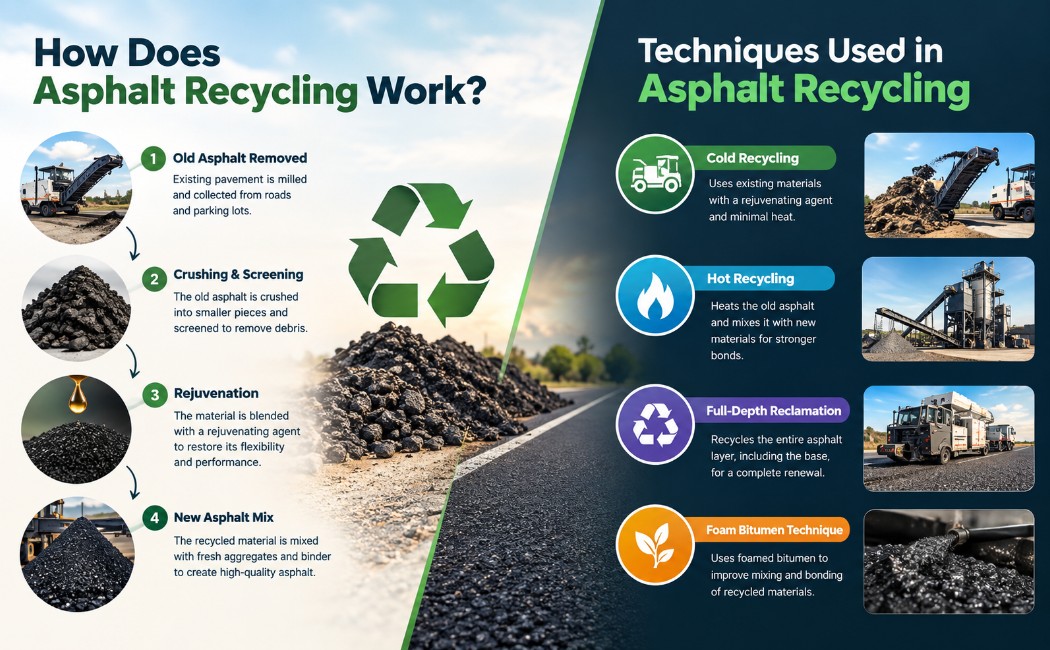
Asphalt recycling is the practice of reclaiming, processing, and repurposing old asphalt pavement for use in new paving or repair operations. The reclaimed material is known as reclaimed asphalt pavement (RAP).
Rather than discarding damaged asphalt as waste, milling or removing the existing surface, processing the material, and then adding it to a new asphalt mixture. Depending on the condition of the recycled material and the project needs, recycled material can be resurfaced, patched, put in as a base layer, or used as pavement in and of itself.
This can decrease resource consumption used in paving while maintaining desirable performance characteristics of asphalt as a paving material.
What is the Asphalt Recycling Process?
Requirements for the recycling method vary according to the condition of the pavement, the size of the project, and the ability to leave the existing asphalt in place.
Cold In-Place Recycling
Cold in-place recycling, or CIR, entails milling and on-site processing of the existing pavement. The reclaimed material is mixed with a stabilizing agent and applied to the roadway.
This process can fix issues with the pavement without having to move significant quantities of old material.
Hot In-Place Recycling
Hot in-place recycling involves heating the existing asphalt surface to soften, loosen, and rework it. Extra asphalt material or rejuvenating materials can be added prior to placement and compaction of recycled pavement.
It is especially beneficial when the underlying pavement structure is still adequate, but surface issues have arisen.
Full-Depth Reclamation
Full-depth reclamation is to a greater depth than surface recycling. Old asphalt and some of the underlying materials are pulverized and mixed, sometimes with a stabilizing agent.
The recycled material is used to form a very strong bed for a fresh pavement surface. This method may be appropriate for pavement deterioration that is deep into the pavement.
Why Recycled Asphalt is a Good Paving Option
Asphalt recycling is more than just recycling used pavement.
Waste reduction in materials used.
Recycling helps prevent usable asphalt from going into landfills and decreases the need for new asphalt pavement production. That’s a convenient option for projects that require material efficiency.
It Can Cut Down on Transportation.
If recycling is conducted on-site, the number of truckloads of old pavement to be hauled and new material to be delivered can be reduced. This can make things easier and save you money on transportation.
The materials currently available are enhanced.
The valuable components of asphalt are aggregates and binder. These components can be recycled and used instead of being discarded after one pavement cycle.
It helps maintain for the long term.
Recycled asphalt methods can be used to solve some of the pavement problems and to prepare the pavement surface for a new surfacing. When used along with regular maintenance of the asphalt pavement, this can help prolong the life of a paved surface.
Signs That It’s Time To Consider Asphalt Recycling?
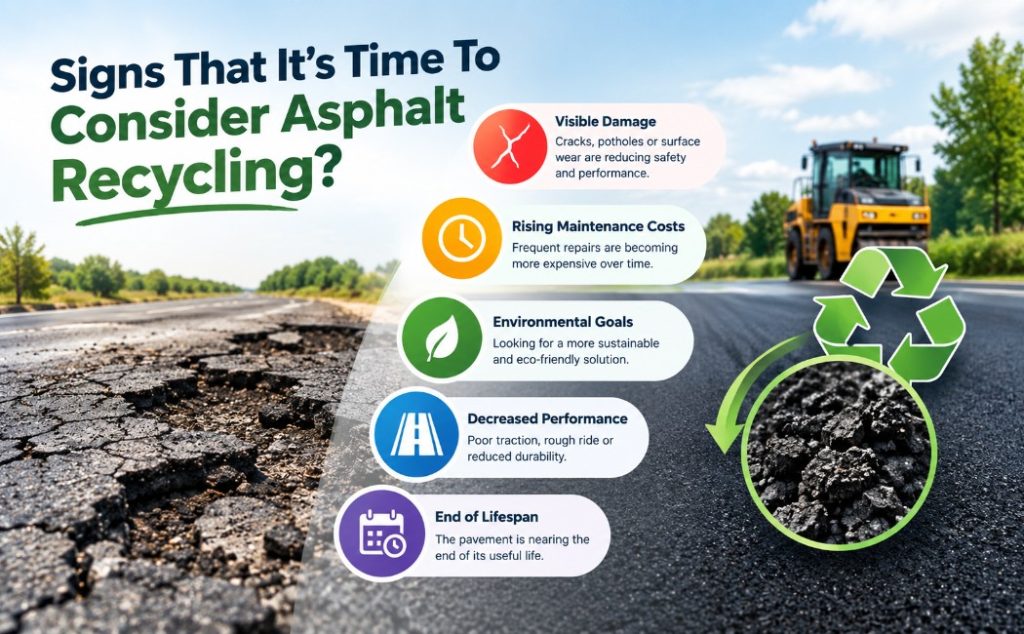
Not all pavements must be removed and replaced. Recycling could be a viable alternative where an asphalt surface exhibits extensive deterioration, structural issues, or where materials can be effectively processed and recycled.
It is essential to have a site assessment prior to choosing a method. The right approach may be different depending on such things as how thick it is, cracking, drainage, traffic load, soil conditions, and previous repair work.
A professional paving company will be able to assess and evaluate the property and be able to tell if recycling, Asphalt Paving Repair, resurfacing, or total replacement is the better option.
How To Select The Appropriate Asphalt Recycling Company?
Go above and beyond a promise of recycled materials. A solid contractor will describe their approach to checking the existing pavement, which type of pavement recycling works for the site, and how the surface will be compacted and maintained.
Asphalt Driveway Contractors can also educate homeowners about the appropriateness of recycling for a driveway versus specific repairs, which may offer a better value.
The factors to look for when comparing the Best Asphalt Recycling Services include their experience with the projects, equipment, material handling practices, written estimates, and preparation methods for the site. Paving Specialists should not simply be able to say the same thing to every pavement, but rather clearly explain the process.
However, if the maintenance is extensive or regular, it may be easier to work with a Local Asphalt Paving company to make the follow-up inspections and maintenance easier.
About Jim’s Paving and Chip Sealing
Jim’s Paving & Chip Sealing offers a variety of paving and surface maintenance services tailored to meet the needs and condition of each property. Whether it’s asphalt maintenance, repair, or paving, the aim is to develop a long-lasting surface by preparing the asphalt surface, using the right materials, and applying them correctly.
From a property owner considering a new asphalt paving project to one who has been using an asphalt surface, Jim’s Paving and Chip Sealing can help determine practical solutions. The right answer is not always to replace all the pavement; it can be repair, resurfacing, chip sealing, or recycling.
When considering reliable paving solutions and high-quality asphalt paving, it is best to begin with a site-specific assessment for property owners.
Final Thoughts
Asphalt Recycling makes use of pavement that already exists by using a method of recycling the material, such as cold in-place recycling, hot in-place recycling, or full-depth reclamation. The right approach can minimize waste, minimize material movement, and enable effective pavement maintenance.
However, before selecting a recycling alternative, have an evaluation of the existing pavement conducted. The decision should be based on its condition or structure, drainage, and expected traffic.
People Also Asked
- Does recycled asphalt have the same strength as new asphalt?
When properly processed, mixed, placed, and compacted, it can deliver solid and durable performance. Quality of the materials and project design will affect the final result.
- Can driveway asphalt be recycled?
Yes. Driveway asphalt may be removed, processed, and reused, depending on the condition of the material and its intended use.
- What is RAP?
RAP, or reclaimed asphalt pavement, is the asphalt material that is removed from existing pavement and processed in order to be used in pavement.
- Can asphalt recycling be cost-effective?
It can save material and transportation costs, depending on the type of recycling, the scale of the project, the condition of the pavement, and local costs.
- How often does recycled asphalt need maintenance?
Maintenance is dependent on traffic, drainage, weather, installation quality, and surface condition. Cracks and other problems can be caught at an early stage with regular inspections, which will prevent them from becoming more expensive